
 Scoop has an Ethical Paywall


Saturday, 20 April 2024, 12:44pm
Government: Minister Releases Fast-track Stakeholder List
Women's Rights Party: Health Ministry Should Ban Puberty Blockers
Dunedin Performance: P!nk Powers Dunedin Economy With $16.6 Million Boost
Inspectorate Report : Prisoners Denied Entitlement To Daily Time Out Of Cells
Vaping Study: Shows Link To Heart Failure
 Gordon Campbell: On The Public Sector Carnage, And Misogyny As Terrorism
 National Maori Authority: Maori Authority Warns Government On Fast Track Legislation
 NZ Government: Comprehensive Partnership The Goal For NZ And The Philippines
 DoC: Canterbury Spotted Skink In Serious Trouble
 Te Pāti Māori: Oranga Tamariki Cuts Commit Tamariki To State Abuse
 NZCTU: Inflation Data Shows Need For A Plan On Climate And Population
 Statistics New Zealand: Annual Inflation At 4.0 Percent
LATEST HEADLINES
- PARLIAMENT
- POLITICS
- REGIONAL
- PM’s South East Asia Mission Does The Business 12:30 PM | New Zealand Government
- Govt Cuts Doctors And Nurses In Hiring Freeze 19/04/24 | New Zealand Labour Party
- $41m To Support Clean Energy In South East Asia 19/04/24 | New Zealand Government
- Progress On Climate Will Be Undone By Govt 19/04/24 | New Zealand Labour Party
- Fast-track Submissions Period Must Be Extended 19/04/24 | Green Party
- Have Your Say On The Restoring Citizenship Removed By Citizenship (Western Samoa... 19/04/24
- Minister Releases Fast-track Stakeholder List 19/04/24 | New Zealand Government
- Wellington Scoop
- New parking scheme in Newtown and Berhampore starting “gradually”
- ‘Top Secret’ fast-track list released – “the whole thing stinks”
- Naenae store robbed by group with knife
- Lower Hutt sets planting target through Mouri Tupu
- Businesses still hiring, but fewer Wellington listings
- Extra $8.3m for urgent work on water infrastructure problems
- Earthquake-prone deadline extended – mayor welcomes decision
 John Mazenier: Gaffer Tape And Glue Delivering New Zealand’s Mission Critical Services
 Earthquake Commission: Ivan Skinner Award Winner Inspired By Real-life Earthquake Experience
 Reserve Bank: Consultation Opens On A Digital Currency For New Zealand
 NIWA: Ship Anchors May Cause Extensive And Long-lasting Damage To The Seafloor, According To New Research
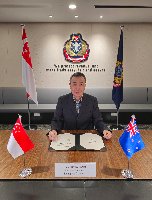 New Zealand Customs Service: A Step Forward For Simpler Trade Between New Zealand And Singapore
 Horizon Research: 68% Say Make Banks Offer Fraud Protection
LATEST HEADLINES
- BUSINESS
- SCI-TECH
- New Fairfield Freight Hub Gets More Goods On Rail 7:00 AM | KiwiRail
- Minister For Regional Development, Shane Jones, Officially Opens LeaderBrand’s C... 19/04/24
- Disabled People Falling Victim To The Work-readiness Trap 19/04/24 | IHC New Zealand
- Better Earthquake Risk Management 19/04/24 | Business NZ
- Businesses Still Hiring, Even In Tough Economic Climate 19/04/24 | Trade Me Limited
- Paramount Pools Merges With Major Australian Franchise Swimart 19/04/24 | Paramount Pools
- Disrupter Fast-track Bill Long Overdue 19/04/24 | Straterra
 Binoy Kampmark: The Australian Defence Formula, Spend! Spend! Spend!
 Ian Powell: New Hospital Building Trumps ‘Yes Minister’ Hospital Without Patients
 Mike Treen: Prices Are Still Rising - It's A Cost Of Living Crisis
 Gordon Campbell: On When Racism Comes Disguised As Anti-racism
 Peter Dunne: Newshub And TVNZ Tip Of Media Iceberg
 Harry Finch: Austerity – For And Against
LATEST HEADLINES
- TOP SCOOPS
- Joining AUKUS Not In NZ’s National Interest 19/04/24 | Eugene Doyle
- The Australian Defence Formula: Spend! Spend! Spend! 19/04/24 | Binoy Kampmark
- Exodus To Zionistan: Willfully Or Woefully 19/04/24 | Abukar Arman
- Cruelty Of Language: Leaked NY Times Memo Reveals Moral Depravity Of US Media 19/04/24
- New Hospital Building Trumps ‘Yes Minister’ Hospital Without Patients 19/04/24 | Ian Powell
- Prices Are Still Rising - It's A Cost Of Living Crisis 18/04/24 | Mike Treen
- Navigating The Divide: Violence VS Terrorism In Recent Tragic Incidents 18/04/24 | Syed Atiq...
 Carbon Market Watch: Going For Green - Is The Paris Olympics Winning The Race Against The Climate Clock?
 New Zealand Defence Force: NZDF Working With Pacific Neighbours To Support Solomon Islands Election
 UN News: Ceasefire The Only Way To End Killing And Injuring Of Children In Gaza
 ICHRP: US-Japan-Philippines Trilateral Summit Makes The Philippines A Battlefield For US-China Conflict
 East West Center: Environmental Journalist Alexander Kaufman Receives East-West Center’s Inaugural Melvin M.S. Goo Writing Fellowship
 Compassion in World Farming: Octopus Farm Must Be Stopped, Say Campaigners
LATEST HEADLINES
- WORLD
- Ukraine War, ‘Stark Reminder’ Of The Trials Facing Multilateralism 7:10 AM | UN News
- Canada Must Strengthen Efforts To Guarantee Right To Water And Sanitation For In... 7:07 AM
- Retaliatory Spiral In Middle East Must End, Says UN Chief After Reported Strikes... 7:05 AM
- UN Climate Change Partners With Global Visual Arts Sector To Increase Climate Ac... 7:03 AM
- Renewable Energy Transforming The Landscape 5:39 AM | UN News
- Argentina: ITUC Condemns IMF’s Praise Of Milei’s Disastrous Economic Policies 5:18 AM
- Myanmar: Türk Sounds Alarm Amid Rising Tensions In Rakhine 4:58 AM | OHCHR
 University of Auckland: Tributes Flow For Much Loved Pacific Leader Melegalenu’u Ah Sam
 NZEI: Ministry Of Education Cuts Will Disproportionately Affect Pasifika
 Day One Hapai te Haeata: Call To Action For Young Filmmakers Against The Backdrop Of Funding Cuts
 Toyota New Zealand: Three Races For Top Three To Decide TR86 Title
 Wellington City Council: Wellington Is All Action Stations For The Faultline Ultra Festival
 Melanie Allison: Local Playwright Casts A Spell Over Hamilton
LATEST HEADLINES
- CULTURE
- HEALTH
- EDUCATION
- Champions Go Wire-To-Wire At South Island Age Groups 6:48 AM | Golf New Zealand
- Rooney Blazes To Red Hot Taupo Pole Position 6:47 AM | TOYOTA GAZOO Racing New Zealand
- Ngāti Whātua ŌRākei Name And Bless ‘Taihoro’, Emirates Team New Zealand’s Boat T... 19/04/24
- Local Comedians Make Splash On The International Stage Ahead Of Nz Comedy Fest 19/04/24
- Rangitāne Kapa Haka Celebrates Remarkable Growth Over The Last 10 Years 19/04/24 | Te Matati...
- Multi Award Nominees, Aro, Celebrate 2024 With Their New Album ‘He Rākau, He Ng... 19/04/24
- 15 Strong Athletics Team Named For Paris 2024 Olympic Games 19/04/24 | New Zealand Olympic C...
